

Before
After
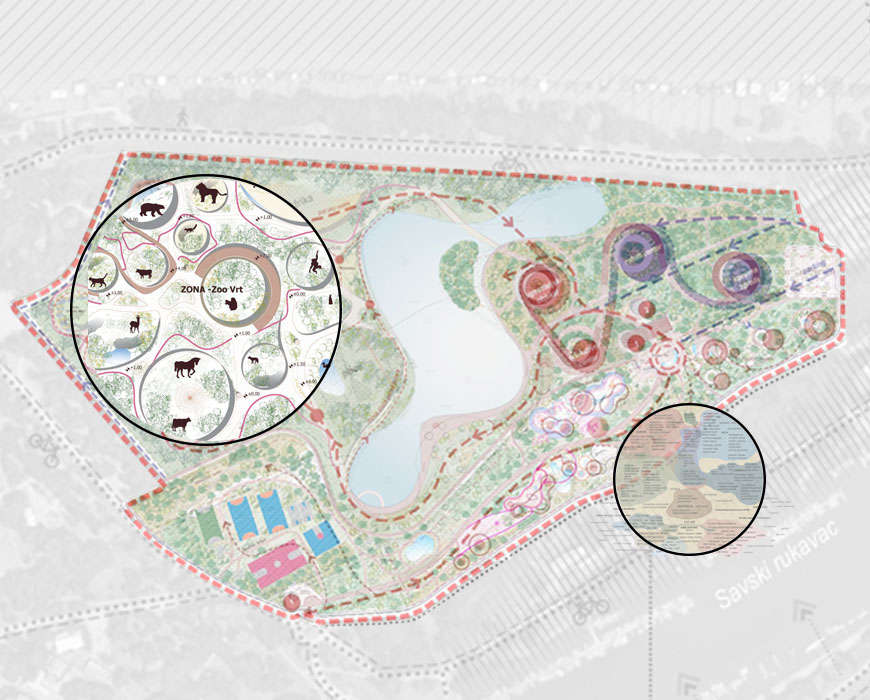
The recreational zone, thematic pavilions, and amusement park are positioned in the southern part of the site, closer to the existing facilities outside the project boundary, allowing the northern, quieter area to be used for animal habitats. This spatial arrangement ensures a functional connection between the zoo’s exhibition areas and the built structures within the site that are necessary for its uninterrupted operation. At the same time, the adopted zoning establishes a gradual transition for visitors into the animal exhibition areas, conceived as the natural oasis of the entire complex, thereby separating quieter habitats from louder recreational activities. The zoo zone is located in the northern part of the site and incorporates Ada Safari Lake as an integral element. Using the lake as part of the zoo, with paths running along its shoreline, allows visitors to enjoy views of waterfowl and other animal species that naturally occur in the area, while simultaneously providing a safe habitat for the existing wildlife, without the intrusion that introducing activities on the water would cause. The zoo exhibition areas are situated on the western side of Ada Safari Lake, where existing mature vegetation and greenery provide ideal conditions for future animal habitats. This area is divided into several zones, each dedicated to specific ecosystems and species characteristic of particular parts of the world, that is, individual continents. Zoo-related buildings are located to the east of Ada Safari Lake, where built structures already exist, in order to minimize the need for occupying additional green areas. The entertainment and recreation park zone extends along the southeastern boundary of the area covered by the competition brief, adjacent to the roadway that borders the site. This zone relies on the more urbanized part of the location, where existing rowing club facilities and the street leading to other amenities at the eastern end of the peninsula are already present.

.svg)






The proposal envisions the creation of Biopark Ada, organized around a central pedestrian promenade that runs through the entire complex, forming a sequence of diverse spatial atmospheres. It is a space that combines elements of a zoological garden, botanical garden, nature reserve, and educational center, with the aim of connecting visitors with nature and the animal and plant worlds. The project site, located around the natural Ada Safari Lake, lies in the northeastern part of the Ada Ciganlija peninsula, an area characterized as a landscape of exceptional value and classified as a Category III protected area of local importance. Given the significance of these protected natural assets, the guiding principles in shaping the conceptual design are the preservation of existing biodiversity, raising awareness of the importance of environmental protection, and the non-intrusive placement of planned physical structures. The area is characterized by rich existing vegetation and a largely preserved natural environment, serving as a natural habitat for endangered and protected species of flora, fauna, and fungi. The challenge of creating synergy between the existing conditions and the planned program was addressed by placing all planned buildings of the entertainment and recreation park and the zoo within the already developed part of the site, while interventions in the remainder of the complex are limited exclusively to landscape design, in accordance with the needs of the animals and zoo visitors.
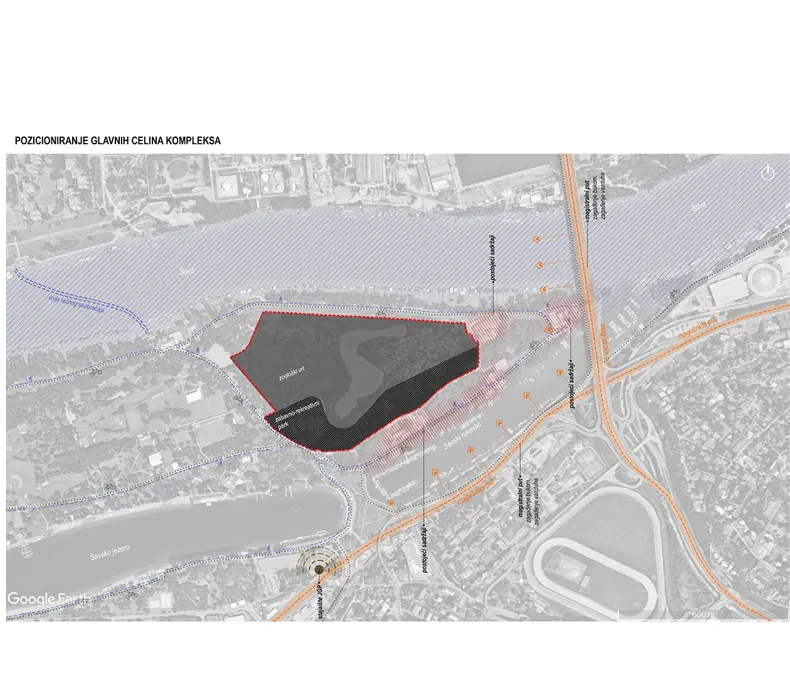
In order to ensure the efficient realization of the planned program, the competition proposal was developed in accordance with the parameters and guidelines of the valid planning document (Detailed Regulation Plan for Ada Ciganlija), with the consistent application of urban environmental protection measures. The proposed concept provides for the removal of the existing illegal settlement and septic tanks, while new zoo construction is located within an already degraded, informally built area. Areas designated for vehicular traffic are reduced to a minimum and rely on existing and planned infrastructure outside the site, significantly reducing noise levels and the negative impacts of motor traffic. Particular emphasis is placed on preserving high-quality existing mature vegetation, complemented by new plantings of predominantly native species, as well as on the formation of green buffer zones between the zoo areas, the entertainment and recreation park, and the wider surroundings, in order to reduce noise, dust, and pollution.

The exhibition area of the zoo is organized on the western side of Ada Safari Lake and relies on the existing mature vegetation, which creates a calm and natural environment for the animals. The zones are defined according to the continental origin of species, forming authentic settings of different ecosystems while simultaneously enhancing the educational and ecological value of the space. This approach enables more natural living conditions for the animals and provides visitors with a clearer understanding of biodiversity.
The existing greenery represents one of the key elements of the concept and the foundation for habitat formation. The planning approach prioritizes the maximum preservation of mature trees and their integration into the zoo zones, ensuring microclimatic comfort, natural shelters, and spaces for animal movement and concealment. Interventions are limited primarily to landscape-design measures, while the elevation of selected pedestrian paths allows for the protection of the soil, flora, and fauna, emphasizing the character of the area as a natural oasis.