🏆 1st Prize at the Urban-Architectural Competition for the Conceptual Design of the Zoo within the Entertainment and Recreation Park on Ada Ciganlija, in collaboration with Studio OBE
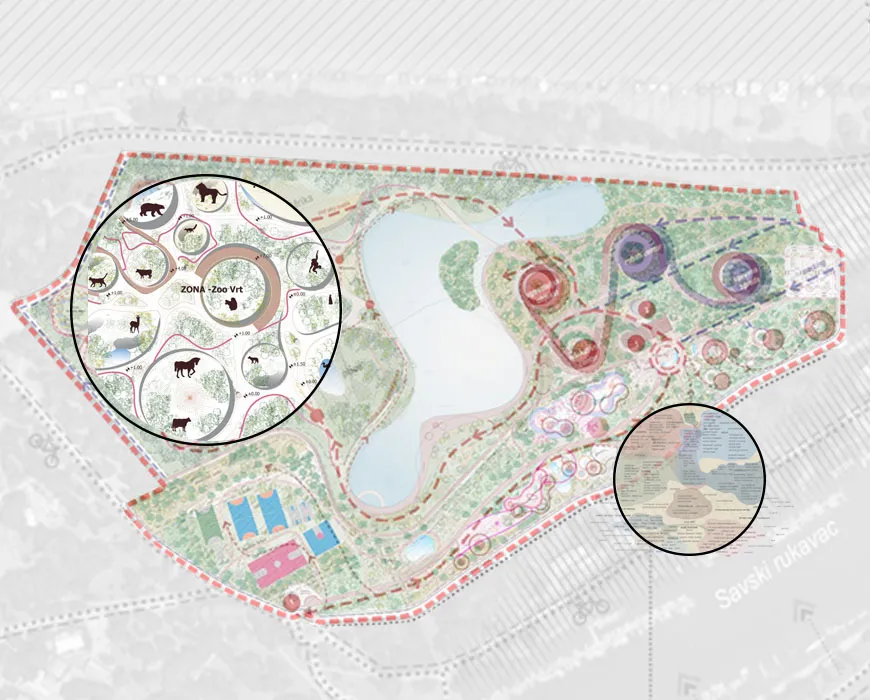
The winning proposal envisions the creation of Biopark Ada, with a central pedestrian path running through the entire complex and forming a sequence of diverse environments. The concept integrates elements of a zoo, botanical garden, nature reserve, and educational center, all with the goal of connecting visitors with nature and the animal and plant worlds.
The project site, surrounding the Ada Safari natural lake, is located in the northeastern part of the Ada Ciganlija peninsula — an area designated as a landscape of exceptional qualities, classified as a Category III protected area of local importance. Given the importance of preserving natural values, the conceptual design was guided by principles of biodiversity conservation, environmental awareness, and minimal visual and spatial intrusion of new structures. The area is characterized by rich vegetation and a largely preserved natural environment, serving as a habitat for endangered and protected species of flora, fauna, and fungi.
The main design challenge — creating synergy between the existing landscape and the planned facilities — was addressed by locating all buildings of the Entertainment and Recreation Park and Zoo within the already developed area, while the rest of the site will include only landscape interventions tailored to the needs of animals and visitors.
ZONING
The recreational zone, thematic pavilions, and amusement park are located in the southern part of the site, adjacent to existing urban structures, while the northern, quieter part is reserved for animal habitats. This spatial arrangement ensures a logical connection between the zoo’s exhibition areas and supporting infrastructure, enabling smooth operations.
Such zoning also creates a gradual transition for visitors — from the livelier recreational zones to the tranquil exhibition areas designed as a natural oasis.
The Zoo Zone occupies the northern portion of the site, incorporating Lake Ada Safari. By integrating the lake as part of the zoo, with walking paths along the shore, visitors can enjoy views of waterfowl and other species that naturally inhabit the area, while the existing wildlife retains a safe and undisturbed habitat free from over development.
The exhibition areas of the zoo are located on the western side of the lake, where dense vegetation provides an ideal environment for future animal habitats. These areas are divided into zones representing different ecosystems and continents, while supporting facilities are placed east of the lake, within an already developed zone, minimizing new land disturbance.
The amusement and recreation park zone stretches along the southeastern boundary of the competition site, adjacent to the access road and existing sports facilities, including rowing clubs and other amenities at the eastern end of the peninsula.
ANIMAL GROUPING BY CONTINENT
Organizing animal habitats according to their continent of origin supports the project’s ecological and educational concept and provides multiple benefits:
· Education and awareness of biodiversity
· Greater efficiency in conservation efforts
· Creation of more natural living conditions
· Promotion of global ecological awareness
· Research and learning opportunities
This approach not only enhances the visitor experience, but also contributes to nature preservation and biodiversity protection through a clear and sustainable conceptual framework.
GREEN AREAS
The wider project area is rich in diverse vegetation essential for maintaining the local ecosystem. Throughout the year, high tree canopies improve microclimatic conditions, lowering air temperatures during summer and providing shelter for numerous bird species during winter.
It is therefore crucial to preserve the existing vegetation as much as possible — both for its ecological value and as a habitat for bird species specific to this area. All planned animal zones are carefully aligned with existing trees, supplemented with new native plantings.
In addition to enhancing the zoo’s visual identity, the greenery creates natural habitats and shelters for animals — for hiding, climbing, and nesting. Elevated visitor walkways ensure minimal disturbance to the flora, fauna, and soil composition, emphasizing the site’s natural character.
Tree specimens deemed unsafe or low-quality can be repurposed as environmental installations, climbing structures, or natural barriers between animal enclosures and visitors.
COMPLIANCE WITH THE REGULATORY PLAN
To ensure the efficient realization of the proposed design, all parameters and guidelines from the Detailed Regulation Plan for Ada Ciganlija were thoroughly analyzed and applied.
Environmental protection measures defined in the chapter “Urban Planning Protection Guidelines” were directly implemented through the conceptual and spatial design:
· The proposal eliminates the existing informal settlement.
· All new buildings are located within areas previously occupied by unplanned structures slated for removal.
· All septic tanks on the site will be decommissioned.
· Vehicular access is minimized and connected to the external road network, reducing noise and emissions.
· The design preserves the existing high-quality vegetation to the greatest extent and introduces new, primarily native species.
· Green buffer zones are established between zoo areas and the amusement park, as well as along the perimeter, to reduce noise, dust, and air pollution within the complex.